
The Best Cultural Experiences in Ios
Culture on Ios is not confined to a museum or a single monument. It is spread across the landscape: in prehistoric stonework, windmills, chapels, place names, agricultural terraces and the memories of people who lived through the island’s transformation.
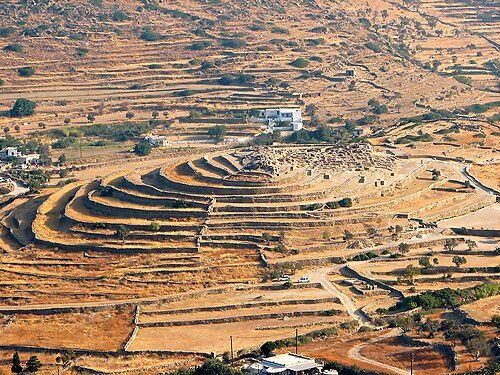
The prehistoric settlement of Skarkos is the essential starting point. Its preserved architecture offers a rare view of Early Cycladic life and places Ios within the wider history of the Aegean. A visit becomes more meaningful when combined with the surrounding valley and the old routes leading toward Chora.
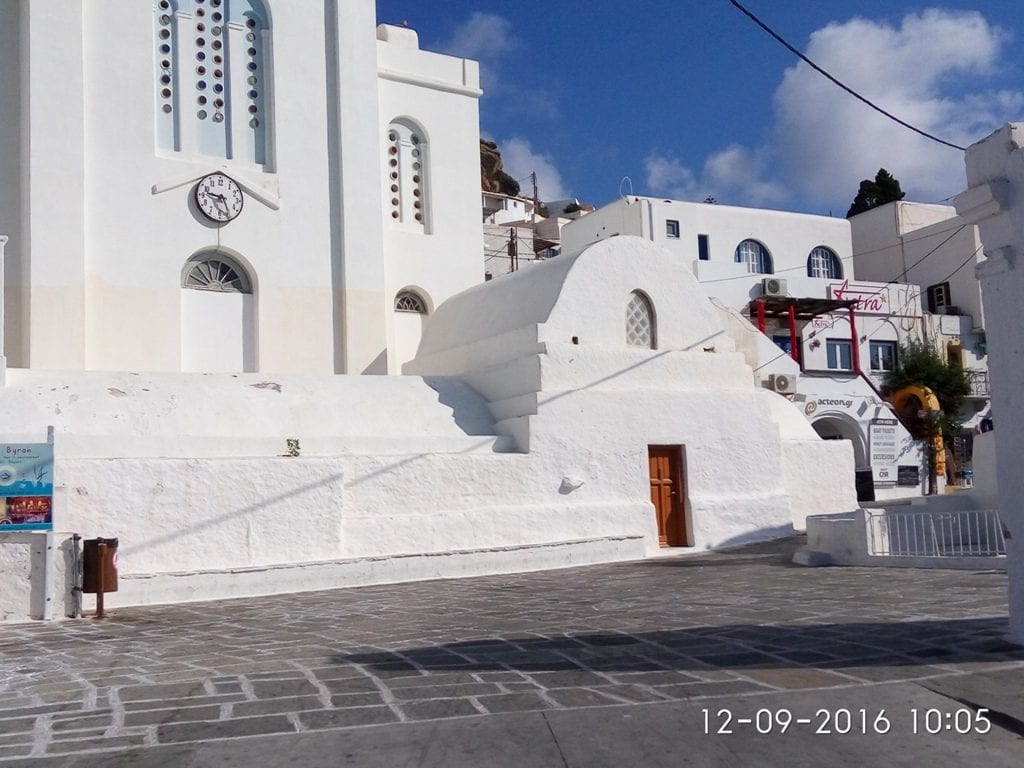
Chora provides the next layer. The settlement’s alleys, churches, windmills and hilltop viewpoints are not merely photogenic. They reflect changes in defence, worship, trade and everyday life. Moving through Chora on foot makes it possible to read the village as a historical landscape rather than as a backdrop.
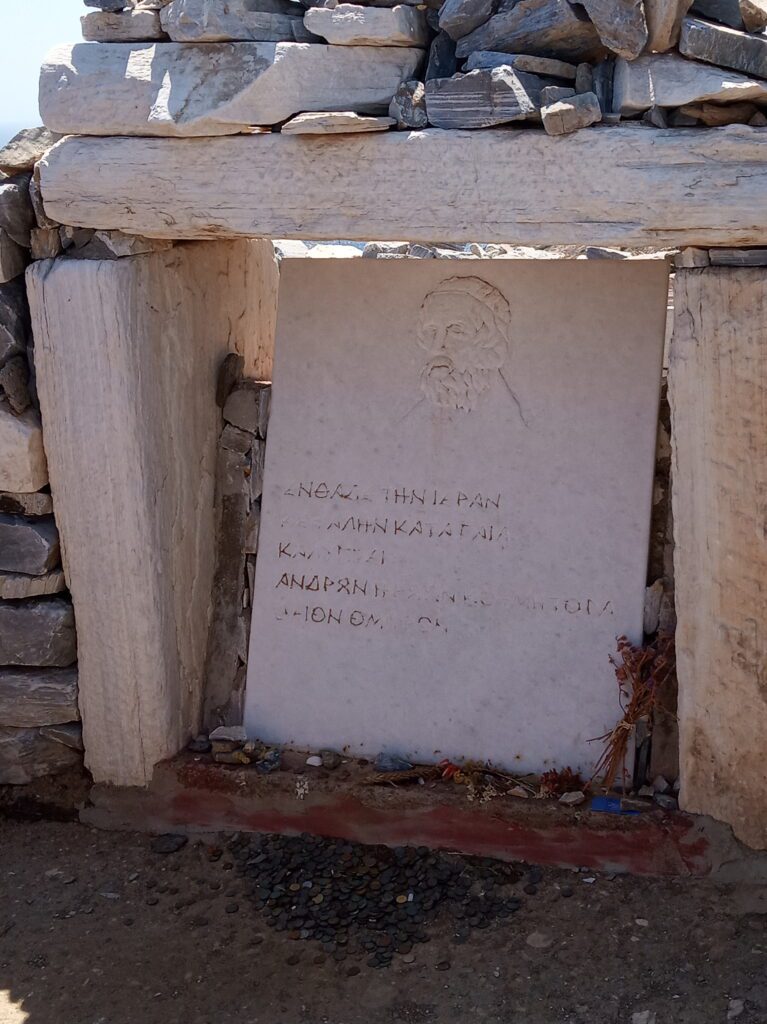
The site traditionally known as Homer’s Tomb adds myth and collective memory. The question is not simply whether Homer was buried there. The deeper cultural value lies in the long relationship between Ios and the poet, recorded in local tradition, travellers’ accounts, maps and material references.
Rural culture is equally important. At Diaseli Cheesery, visitors encounter the labour, equipment and knowledge behind traditional products. In the cultivated valley of Pano Kampos, olive trees, vines, figs and small family gardens show how islanders worked with limited soil and water.
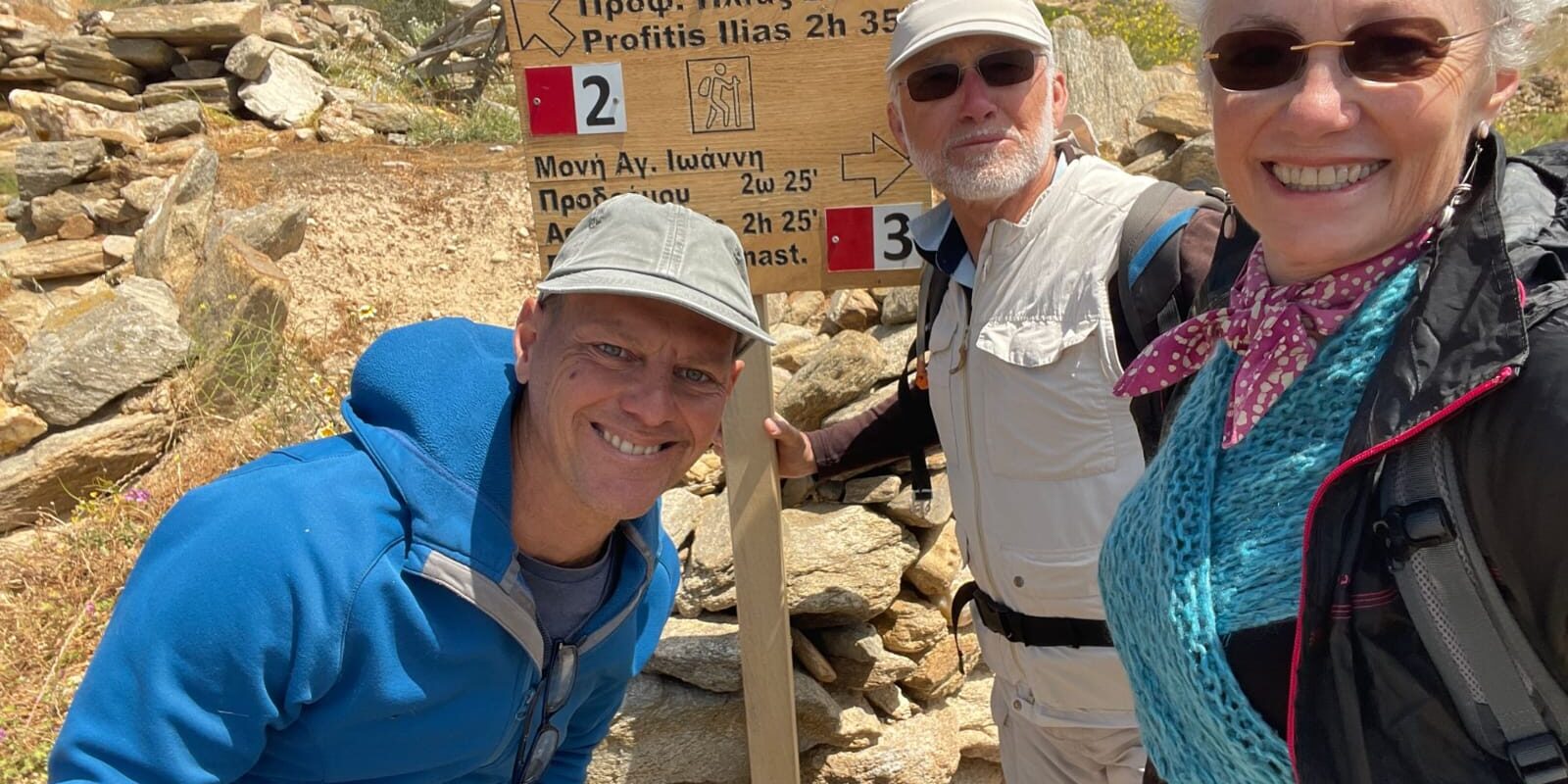
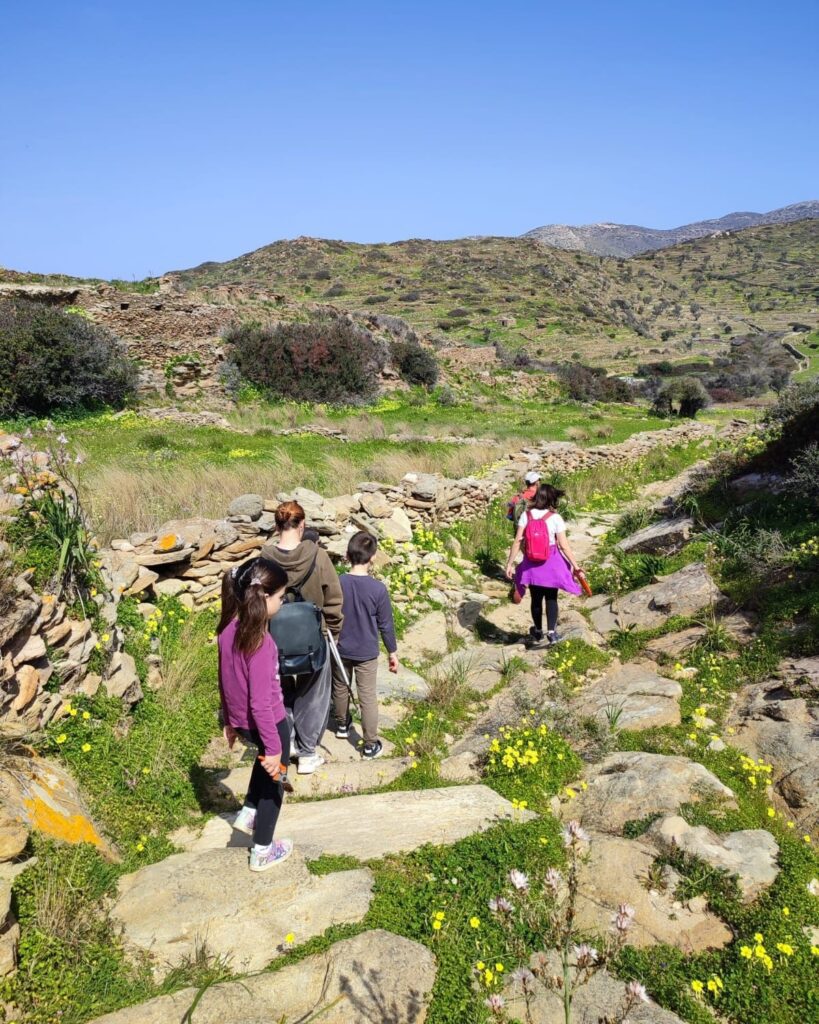
The old footpaths connect all these themes. They once linked settlements, fields, beaches and chapels. Walking or riding along them changes the visitor’s understanding of distance and explains why specific places developed where they did.
Finally, cultural interpretation matters. A list of stops is not enough. The strongest experience brings together archaeology, oral history, maps, local food and the present-day landscape. That is the difference between seeing several attractions and understanding how an island evolved.